
what is section 143 approved land in uttar pradesh
Confused about buying land in Uttar Pradesh? Discover what 'Section 143 approved' means and how land conversion can help you build a legal home, secure a bank loan, and avoid common pitfalls for first-time buyers.what is section 143 approved land in uttar pradesh
NCR REGION UP
Rajesh Kumar
4/28/20265 min read
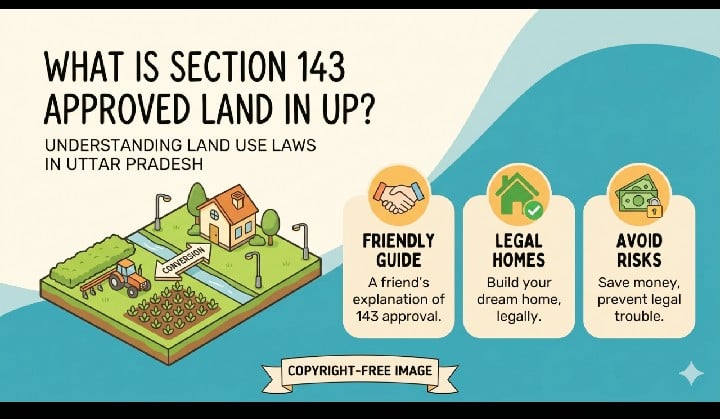
My dear friends, have you ever taken a drive through the outskirts of a growing city like Lucknow or Noida and seen those sprawling fields suddenly filled with half-finished houses and "Plot for Sale" signs? If you’ve ever thought about buying one of those spots to build your dream home, you might have heard someone mention "Section 143."
Let's explore this now, because as far as reality is concerned, understanding this one little legal number can be the difference between owning a beautiful home and owning a massive legal headache. In my experience, land deals in Uttar Pradesh can feel like navigating a maze, but Section 143 is basically your "get out of jail free" card when it comes to land use.
The Mystery of Agricultural Land
To understand what Section 143 is, we first have to look at how land is classified. In Uttar Pradesh, almost every piece of land starts its life as "agricultural" land. This means the government expects you to grow wheat, rice, or maybe some mustard there.
I have observed that many first-time buyers think that if they buy a piece of dirt, they can do whatever they want with it. But that’s not how it works! If the records say the land is for farming, you technically aren’t allowed to build a house, a shop, or a factory on it. If you try to build a villa on a potato field without the right permission, the authorities can actually come and tear it down.
That is where Section 143 comes into play.
What is Section 143 anyway?
Without further ado, let’s proceed into the legal nitty-gritty. Section 143 refers to a specific part of the UP Zamindari Abolition and Land Reforms Act. It is the formal process that changes the status of land from "Agricultural" to "Non-Agricultural" (which we usually call Abadi).
When a piece of land is "143 approved," it means the Sub-Divisional Magistrate (SDM) has officially declared that this land is no longer being used for farming. The government has stamped it and said, "Okay, you can build a house here now."
I feel that it’s important to mention a quick update here. While everyone still calls it "Section 143," the state actually moved things over to the UP Revenue Code of 2006, where this process is now technically under Section 80. But just like we still say "Xerox" for a photocopy, everyone in the UP real estate world still says "143."
Why you should care about Section 143 approval
Imagine this:
You find a beautiful plot at a bargain price. You pay the money, get the deed, and start buying bricks. Then, you go to the bank for a home loan, and they look at your papers and say, "Sorry, we can't help you."
I have seen this happen to so many people! Most reputable banks will not give you a construction loan unless the land has Section 143 approval. They want to know that your house is legal. If the land is still marked as agricultural, the bank sees it as a huge risk.
Also, if the government decides to build a highway through your area, having that 143 approval is a lifesaver. Usually, the compensation for residential land is much higher than for raw farmland.
The story of a "Cheap" plot
Let me tell you a quick story about a friend of mine, Amit. Amit found a developer selling "luxury plots" near Ghaziabad. The price was almost 30% lower than everything else in the area. Amit was thrilled! He thought he’d found the deal of a lifetime.
However, when he started digging into the paperwork, he realized the land was still registered as agricultural. The developer promised him, "Don't worry, brother, we will get the 143 done later."
Luckily, Amit asked around first. In my experience, "later" often means "never" when it comes to developers. Without that conversion, Amit wouldn't have been able to get a municipal water connection or a legal electricity meter for a residential house. He ended up walking away, and honestly, he saved himself years of stress.
How does land get Section 143 approval?
You might be wondering how this process actually works. It’s not just a matter of paying a fee and getting a sticker.
The Application:
The landowner (the Bhumidhar) has to apply to the SDM or the Assistant Collector.
The Inspection:
This is the part where the Lekhpal (the local land official) comes out to the site. They check to see if crops are still growing there or if the land has already been prepped for building.
The Inquiry:
The officials check if the conversion interferes with any master plans or environmental rules. For example, you can't just convert a piece of land that is supposed to be a protected forest or a public pond.
The Declaration:
If everything looks good and you’ve paid the conversion fees (which can be around 3% to 9% of the market value), the SDM issues a formal declaration.
Once that declaration is signed, the land is officially "converted." You can't go back to farming fish or chickens there once it's residential, but you can build your dream home with a clear conscience.
Things to check before you sign
If you are looking at a "Section 143 approved" plot today, don't just take the seller's word for it. Here is what I always tell people to do:
Ask for the 143 Order:
Don’t just look at a brochure. Ask to see the actual certified copy of the order from the SDM’s office.
Check the Bhulekh Website:
The Uttar Pradesh government has a great online portal called UP Bhulekh. You can check the land records (the Khatauni) yourself. If the land is converted, the remarks section will usually mention the Section 143 or Section 80 declaration.
Verify the Area:
Sometimes a developer has 10 acres of land but only 2 acres are 143 approved. Make sure your specific plot falls within the approved zone!
Is it worth the extra money?
You will notice that "143 approved" plots are always more expensive than raw agricultural land. I know it’s tempting to save money, but I feel that the extra cost is basically an insurance policy for your future.
Buying non-converted land is like buying a car without a title. Sure, you can sit in it and look at it, but the moment you try to drive it on the main road, you're going to have a problem with the law.
Final thoughts on your land journey
Buying land in Uttar Pradesh is a huge milestone. It’s about building a legacy for your family. By making sure your land is Section 143 approved, you are making sure that legacy is built on a solid, legal foundation.
I hope this helped clear up some of the confusion! It’s a lot to take in, but once you understand these basics, you’ll be much more confident when talking to brokers and sellers. Just remember: always check the papers, never rush into a "too good to be true" deal, and when in doubt, ask to see the SDM’s stamp!
Good luck with your new website and your land search! If you have more questions about how things work on the ground in UP, I'm always here to chat.