
what is free hold property in up real estate
Discover what freehold property means in UP real estate, how it safeguards your investment, and why it's a better choice than leasehold homes in Noida and Lucknow. Learn about the benefits of buying property in UP today.what is free hold property in up real estate
NCR REGION UP
what is free hold property in up real estate
5/25/20265 min read
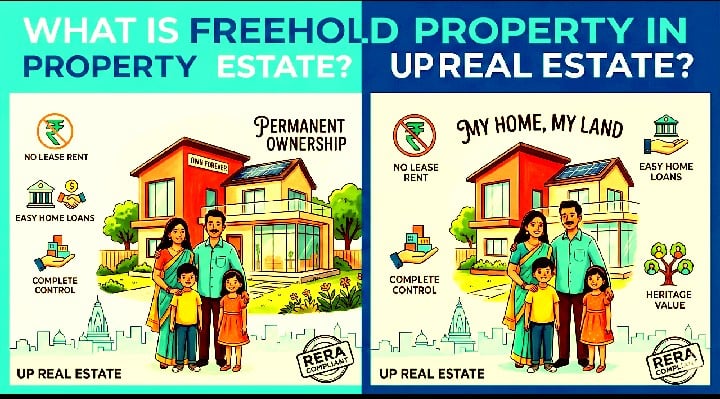
Imagine you are sitting down with a hot cup of tea, chatting about your future plans, and the topic of buying a home pops up. Buying a house or a piece of land is easily one of the biggest milestones in our lives. If you are looking at houses in Uttar Pradesh, you have probably run into two big terms that real estate agents throw around like confetti: leasehold and freehold.
My dear friends, navigating the real estate world can feel like walking through a thick fog. A friend of mine recently wanted to buy a beautiful villa in Lucknow. He called me up, totally stressed out, asking, "What on earth does freehold even mean, and why should I care?"
I told him exactly what I am going to tell you today. Let's explore this now and break down what freehold property really means in UP real estate, why it matters to your wallet, and how it keeps you safe.
The Actual Meaning of Freehold Property
As far as reality is concerned, the word "freehold" is exactly what it sounds like. It means you are completely free from the hold of any landlord, development authority, or government body. When you buy a freehold property, you buy the building *and* the piece of earth it stands on. It belongs to you forever.
In my experience, people often confuse homeownership with land ownership. I have observed that in many planned cities across Uttar Pradesh, like Noida or Greater Noida, you do not actually own the land when you buy an apartment or a house. The local development authority owns it, and they just rent it out to you for a long time, usually 99 years. That is called a leasehold.
But with a freehold property, there is no ticking clock. There is no expiry date on your ownership deed, and nobody can knock on your door in a few decades demanding a lease renewal fee. You are the king or queen of your castle. You can pass the home down to your children, grandchildren, and great-grandchildren without asking anyone for permission.
Why Freehold Rules the UP Real Estate Market
Without further ado, let's proceed to the actual benefits of owning a freehold property in UP. I feel that understanding these points will save you a massive amount of headache later on.
1. Complete Freedom to Change Things Up
Have you ever tried to renovate a rented apartment? You have to ask the landlord just to drill a hole for a television mount. A leasehold property feels a bit like that. If you want to break down a wall, add a second floor, or change the structural layout of a leasehold home in UP, you often need to run to the local authority for a mountain of paperwork and approvals.
With a freehold property, the control is entirely in your hands. Want to turn your front yard into a beautiful garden or build an extra room for your growing family? As long as you follow the basic local municipal building codes, you do not need to beg a government landlord for permission.
2. No Sneaky Recurring Charges
When you own a leasehold property, you have to pay something called ground rent or lease rent to the authority. It might seem small at first, but it is a recurring cost that stays with the property. Freehold properties completely eliminate this stress. You do not owe anyone any ground rent. You only pay your standard property taxes to the local municipal corporation, just like every other citizen.
3. Smoother Home Loans and Bank Approvals
I remember helping my cousin look for a home loan a couple of years ago. Banks can be incredibly picky. If you try to get a loan for a leasehold property where the lease only has 30 years left, banks get very nervous. They worry about what happens if you default on the loan and the lease runs out.
Banks absolutely love freehold properties. Because the ownership is crystal clear and permanent, financial institutions see it as a safe investment. They will approve your home loan much faster, offer better interest rates, and give you a higher loan amount relative to the property value.
The Huge Difference Between Noida and the Rest of UP
Now, here is a piece of reality that trips up almost everyone. Uttar Pradesh is a massive state, and real estate rules change depending on where you look.
If you look at cities like Lucknow, Kanpur, Varanasi, or Agra, freehold properties are very common. You buy a plot of land from a private seller or an old colony, register the sale deed, and the land is yours forever.
However, things get unique when you look at the Delhi-NCR side of Uttar Pradesh, specifically Noida, Greater Noida, and Yamuna Expressway.
Historically, these areas were built on a pure leasehold model. The government acquired massive tracts of farmland, created development authorities, and leased plots to builders or individuals for 90 to 99 years. For decades, residents in Noida have been pushing the government to convert their leasehold homes into freehold properties to give them better security and higher property value. While the government occasionally discusses conversion policies and fee structures, the vast majority of properties in Noida proper still remain leasehold today.
If you are looking for long-term legacy building or pure capital gains without bureaucratic hurdles, finding a freehold property in UP is your best bet. If you do buy a leasehold property in an area like Noida, always check how many years are left on the lease clock before you sign the check.
How UP RERA Protects Your Property Investment
We cannot talk about UP real estate without talking about protection. The Uttar Pradesh Real Estate Regulatory Authority, or UP RERA, is the referee that keeps the property market fair.
I feel it is vital to share some incredible new updates that just came out recently. The authority rolled out its 10th Amendment to safeguard homebuyers across the state. This is a game-changer for anyone buying property in UP.
Help for Unregistered Projects:Previously, if a builder tricked you into buying a home in a project that was not registered with RERA, you were stuck in a legal dead-end. Now, UP RERA will accept and hear complaints from buyers in unregistered developments. They will penalize the builder while fighting for your rights.
Capped Transfer Fees: Builders used to charge crazy, arbitrary fees if you wanted to sell your booked property to another buyer before registration. UP RERA completely stopped this extra revenue stream for builders. They capped the transfer fee at just ₹25,000 for standard buyers, and a tiny ₹1,000 processing fee if you are transferring the property to a family member.
The 5-Year Warranty: When you get possession of your property, the builder is legally responsible for any structural defects or bad workmanship for five whole years. If something breaks or leaks, they have to fix it within 30 days for free.
Checking the Papers Before You Buy
Before you close the deal on your dream freehold home, you must do your homework. I have observed too many people fall into traps because they trusted a sweet-talking broker.
First, look closely at the **Chain of Title Deeds**. This is a list of every single person who owned the property before you. You want to make sure there are no gaps in the history.
Second, get an **Encumbrance Certificate** from the local sub-registrar office. This paper proves that the property is free from any legal disputes or unpaid bank loans. You do not want to buy a home only to find out the previous owner used it as collateral for a massive loan and disappeared.
Finally, check the **Property Tax Receipts**. Make sure the current owner has paid every single rupee to the municipal corporation.
Buying a freehold property in Uttar Pradesh gives you incredible peace of mind. It is a wonderful feeling to know that the roof over your head and the ground under your feet belong completely to you. Take your time, verify the documents, keep the latest UP RERA rules in your corner, and you will make a fantastic investment for your family's future.