
what happens if a project is not rera approved in yamuna expressway
Considering investing in Yamuna Expressway real estate? Discover the financial and legal risks of purchasing non-RERA approved plots near Jewar Airport. Stay informed to make a wise investment decision. what happens if a project is not rera approved in yamuna expressway
NCR REGION UP
Rajesh Kumar
3/11/20266 min read
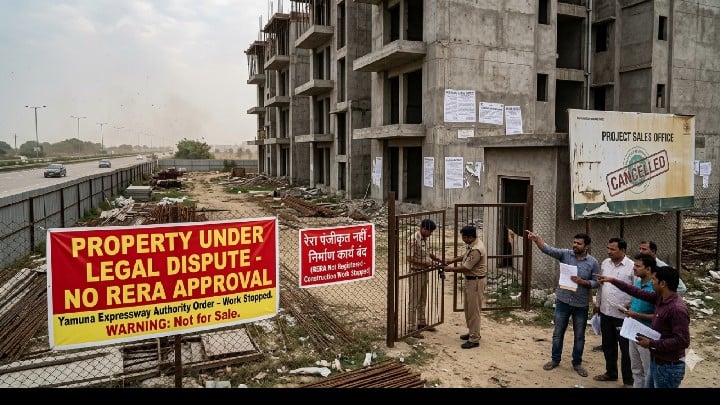
My dear friends, welcome back to another deep dive into the world of smart investments and wealth creation. If you have been following the news lately, you already know that the region surrounding the upcoming Noida International Airport is practically buzzing with electricity. The Yamuna Expressway and the Jewar area have become the undisputed darlings of the Indian real estate market. Everyone wants a piece of the pie.
Between managing my five websites, optimizing my affiliate marketing campaigns, and brainstorming content for my seven YouTube channels, I spend a massive amount of time analyzing market trends. And lately, my inbox has been flooded with questions about real estate in the YEIDA (Yamuna Expressway Industrial Development Authority) region. People are seeing advertisements for incredibly cheap plots and flats that promise astronomical returns. But there is a very dark side to these "too good to be true" offers: many of them are completely unregistered and lack UP RERA approval.
So, what exactly happens if you put your hard-earned money into a project that is not RERA approved? What are the true risks hiding behind those glossy brochures and aggressive sales pitches? Without taking up any more time, let's proceed, and unpack the harsh truths of unregistered real estate along the Yamuna Expressway.
The Phenomenon of the Jewar Boom and Investor FOMO
Before we can understand the risks, we have to understand the environment. The development of the Noida International Airport in Jewar has created a textbook case of FOMO—the Fear Of Missing Out. Investors from all over the country are rushing to secure land in sectors like Sector 18, Sector 20, and Sector 22D. The promise is simple: buy now while the infrastructure is developing, and reap massive capital appreciation when the airport becomes fully operational.
This massive surge in demand has created a fertile breeding ground for unscrupulous developers and local land sharks. They acquire small patches of agricultural land, carve them up into rudimentary plots, give the "project" a fancy name, and start selling them at prices that are drastically cheaper than legitimate, authority-approved townships. To the untrained eye, a plot is a plot. But legally, the difference between a RERA-approved project and an unregistered one is the difference between securing your future and walking into a financial nightmare.
Understanding RERA and Why It Exists
Let's explore this now, because the foundational knowledge is crucial. The Real Estate (Regulation and Development) Act, 2016 (RERA) was enacted by the Government of India specifically to protect homebuyers and boost investments in the real estate sector. Before RERA, the real estate market was largely unregulated. Builders could take your money, delay the project for a decade, divert your funds to other projects, or simply vanish.
When a project is registered under UP RERA, the developer is legally bound to strict guidelines. They must maintain a separate escrow account for the project's funds (ensuring your money actually goes into building your specific project), adhere to strict delivery timelines, and provide regular, transparent updates. Most importantly, a RERA registration proves that the developer actually owns the land and has the legal right and necessary approvals from YEIDA to build and sell on it.
A non-RERA approved project is essentially an illegal phantom in the eyes of the government.
The Devastating Consequences of Buying Non-RERA Property
If you choose to ignore the red flags and invest in a non-RERA approved project along the Yamuna Expressway, you are exposing yourself to severe financial and legal hazards. Here is exactly what happens:
1. Zero Legal Title and the "Multiple Buyer" Scam
As far as reality is concerned, if you buy an unregistered property, you do not legally own it. Developers of non-RERA projects typically rely on unregistered agreements made on simple ₹100 stamp papers. Recently, YEIDA mandated that all real estate transactions must be conducted through fully registered agreements, and upfront stamp duty must be paid at the time of the agreement to sell. If your developer is bypassing RERA, they are also bypassing this crucial registration process. Because your name is not in the government's official registry, the builder can easily sell the exact same plot to three different people. By the time you realize you've been scammed, the builder has absconded, and you are left fighting a decades-long legal battle.
2. Absolute Lack of Grievance Redressal
If a RERA-registered builder delays your project or violates the terms of your agreement, you have a direct, powerful platform to lodge a complaint. UP RERA authorities have the power to impose heavy penalties, mandate refunds with interest, and even freeze the builder's bank accounts. If your project is not RERA approved, UP RERA will simply reject your complaint. They have no jurisdiction over illegal developments. You will be forced to approach traditional civil courts, which can be an incredibly slow, expensive, and draining process.
3. Inability to Secure Bank Financing
Try walking into a reputed bank to ask for a home loan or plot loan for a non-RERA approved project. You will be denied immediately. Financial institutions require a pristine chain of title, clear ownership history, and RERA compliance to mitigate their own risks. If you are buying an unregistered property, you will have to fund it entirely out of pocket. Furthermore, recent CBI probes into real estate subvention schemes in the Noida and Yamuna Expressway regions have made banks even more cautious. They are heavily scrutinizing all documentation, making non-RERA projects entirely un-financeable.
4. The Threat of Bulldozers and Demolition
The Yamuna Expressway Industrial Development Authority is very strict about master planning. The land around Jewar is zoned for specific purposes—industrial, institutional, residential, and green belts. Non-RERA projects often sprout up illegally on agricultural land whose land-use has not been officially converted. When YEIDA conducts its surveys, any illegal, unregistered plotting is subject to immediate demolition. You could wake up one morning to find that the "township" you invested in has been leveled by government bulldozers, wiping out your entire investment instantly.
5. Complete Illiquidity (You Cannot Sell It)
Let's say you manage to buy an unregistered plot, and miraculously, it doesn't get demolished. Fast forward five years, and you want to sell it to book your profits. You will find it nearly impossible to find a buyer. Educated buyers in the resale market demand registered sub-lease deeds, clear mutation records, and no dues certificates. Without these, your property is a toxic asset. You might be forced to sell it at a massive loss just to liquidate it.
The New YEIDA Regulations You Must Know
In my experience, staying updated with local authority regulations is the single best way to protect your investments. Recently, the Uttar Pradesh government and YEIDA have cracked down hard on real estate malpractices.
They have implemented rules aligning with Section 13 of the RERA Act, which completely prohibits builders from taking more than 10% of the property's cost without executing a formal, registered "agreement to sell." This means buyers are now required to pay a portion of the stamp duty upfront during the booking stage. While some developers have pushed back against this, the core objective is to protect you, the consumer. It establishes a verifiable, government-backed paper trail from day one.
If a broker or developer tries to convince you that you can skip this step, or that RERA registration is "in process" and you should just sign a plain paper agreement to lock in a cheap rate, walk away immediately. It is a trap.
The Hidden Cost of Financial Stress
As someone who deeply values naturopathy, yoga, and a balanced, healthy lifestyle, I cannot stress enough how damaging financial anxiety is to your physical and mental well-being. A home or a real estate investment should be a source of security and peace for your family.
When you invest in a shady, unapproved project to save a few lakhs, you are buying years of sleepless nights, stress, and anxiety. You will constantly worry about whether the builder will deliver, whether the authority will demolish the site, or whether someone else will claim ownership of your land. The stress hormone cortisol wreaks havoc on your body, undoing all the good work you put into your health. No amount of potential profit is worth sacrificing your peace of mind. True wealth is not just money; it is financial security combined with a stress-free life.
How to Verify a Project Before Investing
If you are looking at properties in the Yamuna Expressway and Jewar areas, follow this non-negotiable checklist:
Demand the RERA Number: Ask the developer for the UP RERA registration number.
Verify on the Portal: Do not just take their word for it. Go to the official UP RERA website, enter the registration number, and verify the project details, proposed completion dates, and any past complaints against the promoter.
Check the YEIDA Allotment Letter: Ensure the developer has a legitimate land allotment from the Yamuna Expressway Industrial Development Authority and that all lease rents and dues are cleared.
Insist on a Registered Agreement: Never hand over more than 10% of the property value without executing a legally registered agreement to sell.
Final Thoughts
The Yamuna Expressway is undoubtedly one of the most promising real estate corridors in the country right now. The growth potential is staggering. However, that growth will only benefit those who invest wisely and legally.
Do not let the fear of missing out push you into making a catastrophic financial mistake. Stick to RERA-approved projects, deal with reputed developers, and always prioritize legal safety over a temporary, risky discount. Protect your capital, protect your peace of mind, and let your investments grow securely.