
legal checklist for buying yeida authority plots in resale
Considering a YEIDA Authority plot in resale? Don't sign anything yet! Our friend-to-friend legal checklist covers key documents like the transfer memorandum, no dues certificate, and lease deeds. legal checklist for buying yeida authority plots in resale
NCR REGION UP
Rajesh Kumar
4/14/20267 min read
Hey there, my dear friends! I am so glad you stopped by. If you’ve been scrolling through real estate forums or overhearing people talk at the coffee shop lately, you’ve probably heard a lot of buzz about the Yamuna Expressway. It’s the "it" place right now. With the new airport coming up in Jewar and all those big plans for a Film City, everyone wants a piece of the pie.
But here is the thing: buying a plot from the Yamuna Expressway Industrial Development Authority (YEIDA) in the resale market isn't like buying a pair of shoes online. It's a big move. It’s exciting, sure, but it can also be a bit of a headache if you don’t know what you’re looking at. I feel that many people jump in headfirst because they’re afraid of missing out, only to realize later that the paperwork is a mess.
In my experience, a little bit of homework goes a long way. I have observed so many folks getting stressed over things that are actually pretty simple once you break them down. So, without further ado, let’s proceed and talk about what you actually need to check before you hand over your hard-earned cash.
The Original Allotment Letter is the Birth Certificate of Your Plot
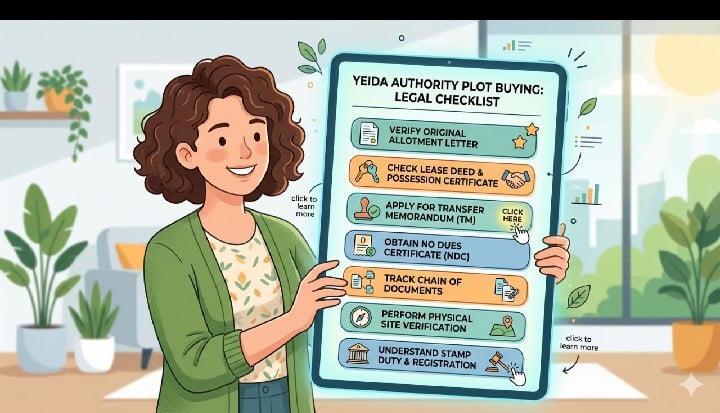
First things first, you have to ask for the original Allotment Letter. Think of this as the plot’s birth certificate. When the authority first gave this land to the original owner, they issued this letter. It’s got everything: the plot number, the size, the sector, and the price the person originally paid.
I once had a buddy who almost bought a plot because the price was "too good to be true." When we finally saw the allotment letter, the plot was actually smaller than what the seller claimed. As far as reality is concerned, if the seller can't show you this original document, you should probably walk away. You want to see the real deal, not a photocopy that looks like it’s been through a blender.
The authority sends this out to the first owner, and it sets the stage for everything else. You need to make sure the name on this letter matches the ID of the person you are talking to. If it’s been sold three times already, you need to see how it got from Person A to Person B to the guy standing in front of you.
Verifying the Lease Deed and Possession Certificate
Next on your list is the Lease Deed. Now, in the YEIDA area, the authority doesn't usually "sell" you the land forever like a freehold property. They lease it to you for 90 years. You need to check if the original owner has already executed the lease deed with the authority.
If they have, great! That means the plot is officially registered in their name in the government records. If they haven't done the lease deed yet, it's called an "unregistered" plot. You can still buy it, but the process is a bit different and sometimes a bit riskier. I always tell my friends to aim for plots where the lease deed is already done because it just makes your life easier down the road.
Along with that, ask for the Possession Certificate. This is the paper that says, "Hey, the authority has physically handed over this piece of dirt to the owner." It proves the authority finished the internal roads, the electricity poles are up (or getting there), and the owner can actually step onto the land.
The Holy Grail: The Transfer Memorandum (TM)
Let's explore this now because this is the part where most people get tripped up. In a resale deal, the most important paper you will ever hold is the Transfer Memorandum, or the TM.
When you buy a plot from someone else, YEIDA has to officially recognize you as the new owner. You don't just sign a paper at a local lawyer's office and call it a day. You have to tell the authority, "Hey, I bought this!" Once they approve it and you pay the transfer charges, they issue the TM.
In my experience, if a seller says, "Oh, we don't need a TM, we can just do a Power of Attorney," you should be very careful. A Power of Attorney (GPA) is not the same as owning the plot. The TM is what makes you the legal owner in the eyes of the government. Without it, you’re basically just a guest on someone else’s land. I’ve seen people lose sleep over this. Always insist on a formal transfer through the authority.
The No Dues Certificate (NDC) is a Non-Negotiable
Money matters, right? You don't want to buy a plot and then find out the previous owner hasn't paid their bills for three years. YEIDA plots often have installment plans. Some owners pay everything upfront, but many pay in chunks over several years.
You must demand a No Dues Certificate (NDC). This is a paper from the authority saying the seller doesn't owe them a single penny. If there are unpaid installments, interest, or late fees, they stay with the plot. That means if the seller disappears, you are the one the authority will come after for the money.
I feel that people often overlook the "Farmer Compensation" issue too. Sometimes, the courts decide the farmers who originally owned the land need more money. The authority then asks the plot owners to pay an additional fee. You should check if all these extra charges are cleared. It’s no fun getting a bill for a few thousand dollars a month after you move in!
Checking the Chain of Documents
If you are the second buyer, the paperwork is simple. But what if you are the fourth or fifth person to buy this plot? This is where you have to be a bit of a detective.
You need to see the "chain." This means you need every single transfer paper from the very first owner down to the current one. If one link in that chain is missing, the whole thing can fall apart when you try to sell it later or try to get a loan from a bank.
I remember talking to a lady who bought a plot in Sector 18. She had the latest papers, but when the bank did their check, they found a missing transfer paper from five years ago. It took her months to track down the previous owners to get everything sorted. Save yourself the gray hairs and check the chain before you sign anything.
Don't Forget the Physical Verification
I know we are talking about a "legal" checklist, but as far as reality is concerned, the physical state of the plot is a legal issue too. You need to go there. Take a drive. Look at the plot with your own eyes.
Is there someone else living on it? Is there a random shed built there? Is it actually a plot, or is it a swamp? I have observed that sometimes the "map" doesn't match the ground. You want to make sure the plot number on your paper matches the stone marker on the land.
I usually suggest taking a local person or a trusted broker with you who knows the area well. If the plot is deep in a sector that doesn't even have roads yet, you might have to wait a long time to build anything. Knowing exactly what you are buying is just as important as the papers.
The Role of the Sub-Registrar’s Office
Once the authority gives the green light, you still have to go to the Sub-Registrar’s office (usually in Greater Noida) to get the sale deed registered. This is where you pay the stamp duty to the government.
A lot of people think the TM is the only step, but the registration is the final legal seal. You’ll need two witnesses, a lot of thumbprints, and some patience. Make sure you have the exact amount for the stamp duty ready. My dear friends, do not try to "save" money here by declaring a lower price than what you actually paid. It’s just not worth the legal risk. The government has fixed "circle rates," and you have to pay at least based on those rates.
Understanding the Fees and Hidden Costs
Buying in resale isn't just about the price of the plot. There are extra costs that can sneak up on you.
Transfer Charges: YEIDA charges a fee to change the name in their records. This can be a decent amount of money depending on the size of the plot.
Processing Fees: Small fees for the paperwork at the authority office.
Stamps and Registration: As I mentioned, this goes to the state government.
Brokerage: If you used a middleman, they’ll want their 1% or 2%.
In my experience, you should sit down with a calculator and add all this up before you agree on a price with the seller. Sometimes these "extra" costs can add up to a significant amount, and you don't want to be surprised when your bank account starts looking empty.
Why You Might Want a Lawyer to Look It Over
I know, I know—lawyers can be expensive and sometimes they use words that nobody understands. But for a deal this big, having a legal pro look at the papers for an hour is a smart move. They can do a "Title Search." This means they go back through the government records to make sure there are no court cases or "stay orders" on that specific plot.
I have observed that even the smartest people can miss a tiny detail in a contract. A lawyer will check if the seller has any "hidden" family members who might claim the land later. It’s all about peace of mind. You want to sleep like a baby after you buy your plot, not toss and turn wondering if someone is going to sue you.
A Quick Word on "GPA" Sales
I want to touch on this one more time because it’s a big trap. Some sellers will offer you a plot on a General Power of Attorney (GPA) and an Agreement to Sell. They might tell you it's "easier" or "cheaper" because you skip the transfer charges.
Don't do it. The Supreme Court of India has been very clear that a GPA is not a transfer of ownership. If the original owner passes away, that GPA becomes useless. If the owner changes their mind, they can try to cancel it. Always, always go through the official YEIDA transfer process. It’s the only way to be 100% safe.
Buying a YEIDA plot is a fantastic investment. The area is growing so fast, and in a few years, it’s going to look totally different. But you have to protect yourself. Use this checklist, ask the hard questions, and don’t let anyone rush you into a deal.
If a seller is getting pushy or doesn't want to show you the original documents, that is a giant red flag. Take your time. The right plot is out there, and when you find it and the paperwork is clean, it’s going to feel amazing.
I hope this helps you feel a bit more confident about your journey into the world of real estate. It’s a bit of a wild ride, but if you keep your head on straight, you’ll do just fine. Good luck with your plot hunting, and I can't wait to hear how it goes for you!