
how to calculate yeida penalty for late construction
Worried about late fees on your YEIDA plot? Discover how to calculate construction penalties in simple terms. Learn to save your money and keep your project on track without the stress of late fees.how to calculate yeida penalty for late construction
NCR REGION UP
Rajesh Kumar
4/10/20267 min read
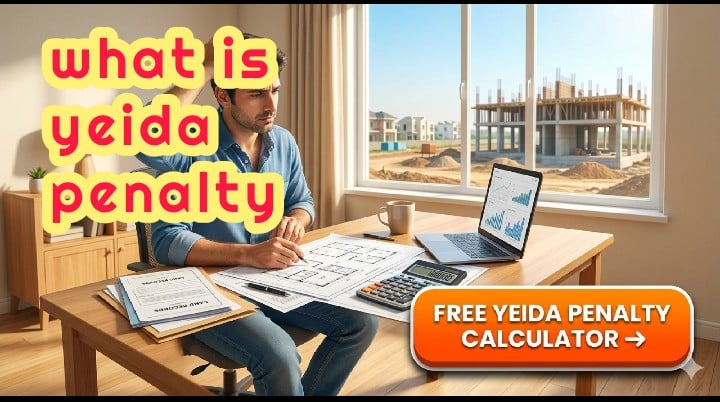
Hey there! If you’ve been scrolling through property listings or dreaming about that perfect plot of land near the new airport, you’ve probably heard of YEIDA. It’s a big name right now. Everyone wants a piece of the action. But, my dear friends, buying the land is only half the battle. The real work starts when you realize there’s a clock ticking in the background.
I’ve seen so many people get their keys, celebrate with a big dinner, and then completely forget that the Yamuna Expressway Industrial Development Authority expects them to actually build something. Life gets busy. You have kids to drop off at school, jobs that keep you late, and suddenly, three years have flown by. Now, you’re looking at a "late construction penalty," or what the officials call an extension fee. It sounds scary, and honestly, it can be a bit of a gut punch to your wallet if you aren't prepared.
Let's explore this now and break down how you can figure out exactly what you might owe.
Understanding the YEIDA Construction Deadline
Before we get into the math, we need to talk about why this happens. In my experience, most people think they can just sit on a plot of land forever and watch the price go up. While that sounds like a great plan, the authority wants to see houses, shops, and factories. They want a living, breathing city, not just a bunch of empty dirt lots.
When you get your allotment, the clock starts. Usually, they give you a specific window—often five to seven years depending on when you bought the plot—to finish your construction. Now, they don't expect you to build a Taj Mahal. Usually, you just have to finish a certain percentage of the allowed area to get what they call a "Completion Certificate."
I have observed that many folks wait until the very last month to even hire an architect. Don't be that person. If you miss that window, the authority starts charging you for every extra year you take. It’s like a library fine, but instead of a few cents, it’s thousands of dollars (or lakhs of rupees).
The Core Logic of the YEIDA Penalty
As far as reality is concerned, the penalty isn't just a random number they pull out of a hat. It is a percentage based on the total money you paid for the land—the "Total Premium."
If you bought a plot for a certain price per square meter, you multiply that by the size of your plot. That’s your base. The penalty is a slice of that pie. The longer you wait, the bigger the slice they take.
I feel that people get confused because the rates change. For the first year of extension, they might charge you 4%. If you still haven't finished by the second year, it might go up to 5% or 6%. It keeps climbing until you finally finish the building and get your papers in order.
Without further ado, let's proceed to the actual steps you need to take to run the numbers yourself.
How to Calculate Your Specific Extension Charges
Calculating this doesn't require a Ph.D. in math, but you do need to have your original paperwork handy. You can't just guess. Here is the simple way to do it.
Step 1: Find your Total Plot Premium.
Check your allotment letter. Look for the total cost of the plot at the time it was given to you. Let's say you have a 300-square-meter residential plot and the rate was 15,000 per square meter. Your Total Premium is 4,500,000.
Step 2: Identify your "Late" Year.
Are you one year late? Two? The percentage changes based on the year. Let’s assume you are in your first year of extension.
Step 3: Apply the Percentage.
If the current rule for the first year is 4%, you take 4% of that 4,500,000.
4,500,000 \times 0.04 = 180,000
That 180,000 is your penalty for that year. It’s a lot of money! You could buy a nice used car for that or take a really great vacation. Instead, it’s going to the authority because the house isn't done.
Step 4: Add the Surcharge.
Sometimes, they add a small extra fee or "surcharge" on top of the penalty. Usually, it's a small percentage of the penalty itself. Make sure you check the latest circular from the YEIDA website because they update these numbers every now and then.
A Real-Life Example of the Construction Headache
Let me tell you about a friend of mine named Mike. Mike bought a plot back in 2015. He was so excited. He used to drive out there every Sunday just to look at the grass. But Mike got distracted. He started a new business, moved to a different city, and forgot all about his construction deadline.
By the time 2023 rolled around, he realized he was two years past his limit. He thought, "Oh, it’ll just be a small fee." When we sat down to do the math, his jaw dropped. Because he had a large plot, his first-year penalty was substantial, and the second-year penalty was even higher because the percentage increased.
He ended up paying nearly 10% of his original plot value just in penalties before he even laid a single brick! He told me, "I could have built a whole extra floor with the money I just handed over."
The lesson here is simple: The authority doesn't care if you were busy. They only care about the date on the calendar.
Factors That Might Change Your Bill
I should mention that it isn't always a "one size fits all" situation. There are a few things that can change how much you owe.
The "Zero Period" Relief: Every once in a while, the government realizes that things happen out of our control. For example, during the COVID-19 pandemic, construction stopped everywhere. YEIDA announced a "Zero Period" where they didn't count those months toward your deadline. If you were building during a time of major court battles or global health crises, you might get a break.
Plot Size Matters: Industrial plots, commercial plots, and residential plots sometimes have different percentage scales. In my experience, industrial owners get a bit more leeway because building a factory is a lot harder than building a house, but the total money involved is usually much higher.
Amnesty Schemes: Keep your ears to the ground! Sometimes the authority launches a "One Time Settlement" scheme. They basically say, "Look, if you pay us right now, we’ll waive the interest or give you a discount on the penalty." If you find yourself in a hole, these schemes are your best friend.
Common Mistakes to Avoid When Calculating
One big mistake I see is people using the current market value of the land to calculate the penalty. As far as reality is concerned, that would be a nightmare. Imagine paying a 4% penalty on a plot that has tripled in value! Thankfully, the authority usually uses the "Allotment Rate"—the price you actually agreed to pay when you signed the papers.
Another mistake is forgetting about the "Completion Certificate." Some people finish the house but forget to file the paperwork. If you don't have that certificate in your hand, the authority thinks you are still sitting on empty land. They will keep charging you even if you are living in the house and throwing parties every weekend! You have to prove to them that you finished.
Steps to Take if You Are Already Late
If you’ve read this far and realized, "Oh no, I’m definitely late," don't panic. Panicking doesn't build houses. Here is what I suggest you do right now.
First, go to the YEIDA office or log into their online portal. Get your current status. Sometimes their records are a bit behind, and you need to know exactly what they think you owe.
Second, hire a local architect who knows the YEIDA bylaws. You don't need to build the whole house to stop the penalty. There is usually a minimum "covered area" requirement. In many cases, if you build just 50% or even less (depending on the specific plot type), you can apply for the completion certificate. It’s a "temporary" fix that stops the bleeding.
Third, pay the fee as soon as you can. These penalties often accrue interest. If you owe 100,000 this year and you don't pay it, next year you might owe that 100,000 plus interest, plus the new penalty for the next year. It snowballs fast.
Why You Should Build Sooner Rather Than Later
I feel that we often procrastinate because construction is stressful. Finding a contractor is a nightmare, cement prices are always going up, and it’s dusty work. But if you look at the math, building now is almost always cheaper than waiting.
Think about it this way: Every dollar you pay in a late penalty is "dead money." It doesn't add value to your house. It doesn't make your kitchen look better. It’s just gone. If you take that same money and put it into construction, you’re actually building equity. You’re making your property worth more.
My dear friends, the Yamuna Expressway area is growing like crazy. With the airport coming up and the film city on the way, those plots are going to be worth a fortune. Don't let a huge chunk of your profit get eaten up by fees that you could have avoided with a little bit of planning.
Final Thoughts on Dealing with the Authority
Dealing with any government authority can feel like a chore. You have to fill out forms, wait in lines, and sometimes you get conflicting information. But when it comes to the YEIDA penalty for late construction, the rules are actually pretty clear once you dig into them.
Do your homework. Calculate your premium. Check your dates. And most importantly, get some bricks on that land! Whether you plan to live there or sell it later, a finished building is always a better investment than an empty lot with a mounting debt attached to it.
I hope this helps clear things up for you. It’s a bit of a dry topic, but knowing these numbers can save you a massive headache down the road. If you’re ever in doubt, just remember: The clock is ticking, but you’re the one holding the stopwatch. Take control of your project today!