
green belt regulations around noida international airport
Navigating the rules of the new Jewar Airport can be overwhelming. Discover how understanding the green belt regulations can help you foresee the area's future and maintain a beautiful, breathable community amidst growth.green belt regulations around noida international airport
NCR REGION UP
Rajesh Kumar
5/16/20266 min read
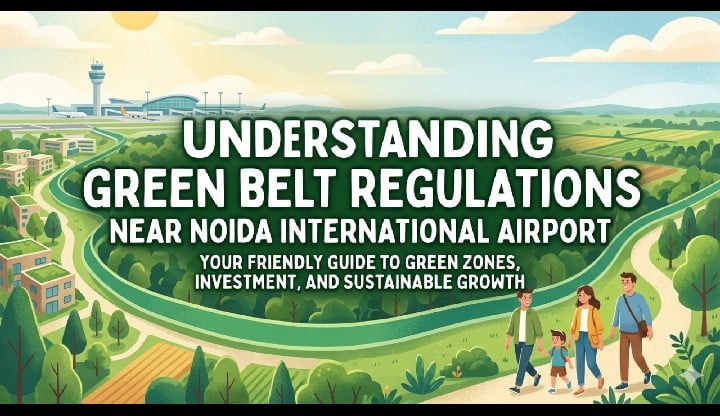
Hey there! If you’ve been keeping an eye on the news lately, you’ve probably heard a ton of buzz about the Noida International Airport. It’s a huge deal, right? But as far as reality is concerned, there is a lot more going on than just runways and planes.
My dear friends, today I want to talk about something that doesn't get as much spotlight but is just as important: the green belt regulations.
I remember driving through the outskirts of Jewar a few years back. It was all quiet fields and open sky. Now, it’s a construction hive. But here’s the thing—the government isn't just letting people pave over every square inch of dirt. They have these strict rules about "green belts" to make sure we don't end up living in a concrete oven.
Let's explore this now and see what these rules actually mean for you, whether you’re looking to buy a house or just curious about how the area is changing.
Why the Green Belt Matters Near Jewar
In my experience, people often see "green belt" on a map and think it’s just a fancy word for "empty space we can't use yet." But I feel that these zones are the lungs of the whole airport project.
The planners are setting aside huge strips of land where nobody is allowed to build factories or massive apartment blocks. Why? Because airports are loud and they kick up a lot of dust. I have observed that without these buffers, the quality of life for people living nearby drops pretty fast.
The regulations around Noida International Airport (NIA) are designed to keep a balance. They want the economic boost of the airport, but they also want to keep some of that rustic, fresh-air vibe that the Yamuna Expressway area is known for. It’s about making sure the "city of the future" doesn't feel like a gray maze.
Navigating the YEIDA Master Plan Rules
Without further ado, let's proceed into the nitty-gritty of the rules set by the Yamuna Expressway Industrial Development Authority (YEIDA). These are the folks calling the shots.
If you look at the master plan, there is a massive chunk of land dedicated strictly to greenery. We are talking about a 500-meter wide green buffer in some spots along the major roads. That is a lot of grass and trees!
Here is what you need to know about these rules:
No Permanent Construction:
You can’t just decide to build a villa in the middle of a designated green zone. The authorities will tear it down faster than you can say "eviction notice."
Specific Land Use:
These areas are meant for parks, forests, and sometimes small nurseries.
Distance Requirements:
There are very specific "setback" rules. This means your building has to be a certain number of meters away from the green belt edge.
I have a friend, Ravi, who almost bought a "cheap" plot near the airport site last year. He was so excited. But when he actually checked the land records, half of that plot fell right inside the protected green belt. If he had bought it, he wouldn’t have been able to build anything bigger than a tool shed. Always check the maps, guys!
How Trees Help Fight Airport Noise
Let's be honest, planes are loud. I’ve stayed in hotels near big airports before, and if the windows aren't double-paned, you feel like a 747 is landing in your lap.
The green belt regulations aren't just for looks; they are a literal sound barrier. Thick rows of trees can actually soak up a decent amount of that engine roar. I feel that the planners in Noida are trying to be proactive here. By mandating these green zones now, they are saving future residents from a lot of headaches (literally).
As far as reality is concerned, these trees also help with the "heat island" effect. All that asphalt on the runways gets hot. The green belts act like a natural air conditioner for the surrounding neighborhoods.
Farming and the Green Zone
One question I get a lot is: "Can I still farm in the green belt?"
The answer is usually yes, but with some catches. The authorities generally prefer "soft" landscaping. In my experience, they are okay with traditional farming or orchards because those don't involve pouring tons of concrete.
However, you can’t turn your farm into a "farmhouse" party venue with a giant paved parking lot and a massive brick wall. That’s where the regulations get strict. They want the soil to be able to breathe and soak up rainwater.
Impact on Property Prices and Investment
Now, let's talk about the money side of things, because I know that’s what a lot of you are thinking about.
Usually, when you hear "you can't build here," you think property values would go down. But I have observed the opposite happening near the Noida International Airport.
Properties that sit right next to a protected green belt are actually becoming *more* valuable. Think about it. If you buy a house, would you rather have a view of a smoky factory or a lush, protected park that can never be turned into a skyscraper?
Investors are starting to realize that "green" equals "premium." The regulations provide a level of certainty. You know that ten years from now, your view isn't going to be blocked by a giant warehouse. That peace of mind is worth a lot of cash in the real estate world.
The Struggle Between Growth and Nature
It’s not all sunshine and roses, though. There is always a bit of a tug-of-war.
Local farmers and some developers feel that the green belt rules are too restrictive. They argue that the land could be used for housing the thousands of workers who will move here for airport jobs. I see their point, but I also feel that if we give in now, we’ll regret it in twenty years.
I’ve seen cities that grew too fast without these rules. They become crowded, hot, and impossible to navigate. The Noida airport project is a chance to do things right from the start. Let's explore this now from the perspective of a kid growing up in this area in 2040. They’ll want places to run and play, not just more roads.
Checking Your Land Status
If you are thinking about jumping into the market near Jewar, you have to be a bit of a detective.
Don't just take a seller’s word for it. Go to the YEIDA office or check their official website. Look for the "Land Use" maps. If a plot is colored green, stay away if you’re looking to build a house or a shop.
In my experience, some shady brokers will try to sell you "green belt land" by saying the rules will change soon. Take it from me: those rules rarely change in favor of the developer. The government is very protective of these zones because they are part of their environmental clearances for the airport itself. If they mess up the green belt, they could actually get in trouble with the central environmental boards.
What Kind of Trees Are We Talking About?
The regulations even go into detail about what gets planted. They aren't just throwing random weeds out there.
They focus on "native species"—trees that actually belong in Uttar Pradesh. I'm talking about Neem, Peepal, and Jamun. These trees are tough, they don't need a ton of water once they're grown, and they provide great shade.
I think it’s a cool touch. Instead of some artificial, manicured lawn that looks like a golf course, we get a bit of the local forest back. It’s better for the birds and the local ecosystem.
Staying Updated on New Announcements
The rules for the area around Noida International Airport are still evolving. As the airport nears its opening date, the authorities are fine-tuning the zoning.
Sometimes they expand the green belt to include more land along the rivers or canals. Other times, they might allow "eco-tourism" projects—think nature trails or small wooden huts—that don't hurt the environment.
Without further ado, let's proceed to the most important advice I can give: stay informed. Follow the official YEIDA social media pages and read the local papers. Things move fast in Noida!
Final Thoughts on the Jewar Green Zones
At the end of the day, these green belt regulations are a win for everyone. Sure, they might seem like a hassle for someone who wants to build a shopping mall on every corner, but for the rest of us, they are a godsend.
I feel that we are at a turning point. We can build a massive international hub that still feels like a place where people can actually live and breathe.
As far as reality is concerned, the airport is going to change the face of North India. But thanks to these green rules, that face might just stay a little bit more beautiful.
My dear friends, keep your eyes on the horizon, but keep your feet on the green grass. If you’re looking to invest or move to the area, embrace the green belt. It’s not a barrier; it’s a backyard that you don't have to mow yourself!
Thanks for hanging out and chatting about this with me today. It’s an exciting time to be watching this part of the world grow. Catch you in the next post!